
Powering Our Future with Purpose
In early 2026, the Kia Kotahi Ako tīma (team) reimagined our established Solar Suitcase education programme as the new Capturing Te Rā curriculum, an indigenous renewable energy and future systems learning pathway for Aotearoa New Zealand. As we begin to embed this programme in kura (schools) and communities across the motu (country), Kia Kotahi Ako Co-Lead Nikora Ngaropo (Te Rarawa, Tuhoe, Ngāti Porou, Ngāpuhi, Ngāti Kahungunu) shares some background on the programme and our vision for its future.
“Kia Kotahi Ako has been running the Solar Suitcase programme in schools and communities for more than four years with great results,” Nikora says. “It has really strong foundations, having been developed in collaboration with teachers, students, kura, funders, partners and champions. This year, as we looked at where we are as an organisation in the context of what’s happening in the world, we started to question how we could be more relevant and connect into different initiatives and ideas while also creating a bridge between ancestral knowledge and the knowledge of today. The new Capturing Te Rā curriculum is an expression of that.”
The programme draws inspiration from the pūrākau (legend) of Māui slowing the sun, Tamanuiterā. In this narrative Māui observes that the sun moves too quickly across the sky, leaving too little daylight for people to complete their work. Rather than responding through strength alone, he studies the movement of the sun, gathers knowledge from his ancestors, prepares tools, and works collectively with his brothers to reshape the rhythm of the day.
This story reflects an enduring approach to knowledge. It begins with careful observation of the natural world, continues through collective investigation and preparation, and culminates in creative action for the wellbeing of the community. Through this programme learners follow a similar pathway; they investigate energy systems, explore renewable technologies, and design solutions that strengthen the wellbeing of both communities and the environment.
Capturing Te Rā has been developed in response to kura with limited resources that need culturally grounded programmes that speak to their own histories and legends through the possibilities presented by modern technologies, Nikora says. “The purpose of Kia Kotahi Ako is to explore and improve educational outcomes for Māori. The lens we’ve chosen to move through is renewable energy: how Māori people engage, work with, grow, and further these spaces. Solar isn’t the only way we do this, but through great partnerships including our partners at We Care Solar, it is one area that has been particularly impactful.”
The mahi aligns closely with Kia Kotahi Ako values and kaupapa (programmes), Nikora says, and it is timely in light of the global context in 2026. “Technology and Artificial Intelligence are transforming the world we knew at a pace that can sometimes feel overwhelming, and the clean power required to run those technologies is reshaping economies. When rangatahi (young people) get the hands-on experience of building a solar system and can see that connected back to a solar installation on their kura - as is the case with our partner kura in Taranaki and Tairāhiwiti - they begin to see that the same energy powering their kura can power industries that haven’t even been imagined yet. They start to understand the data, the energy, the economics, and the ways that their community can produce, store, and even sell power. Energy independence reduces pressure on whānau and strengthens local communities in times of uncertainty. Capturing Te Rā is a critical first step in that journey.”
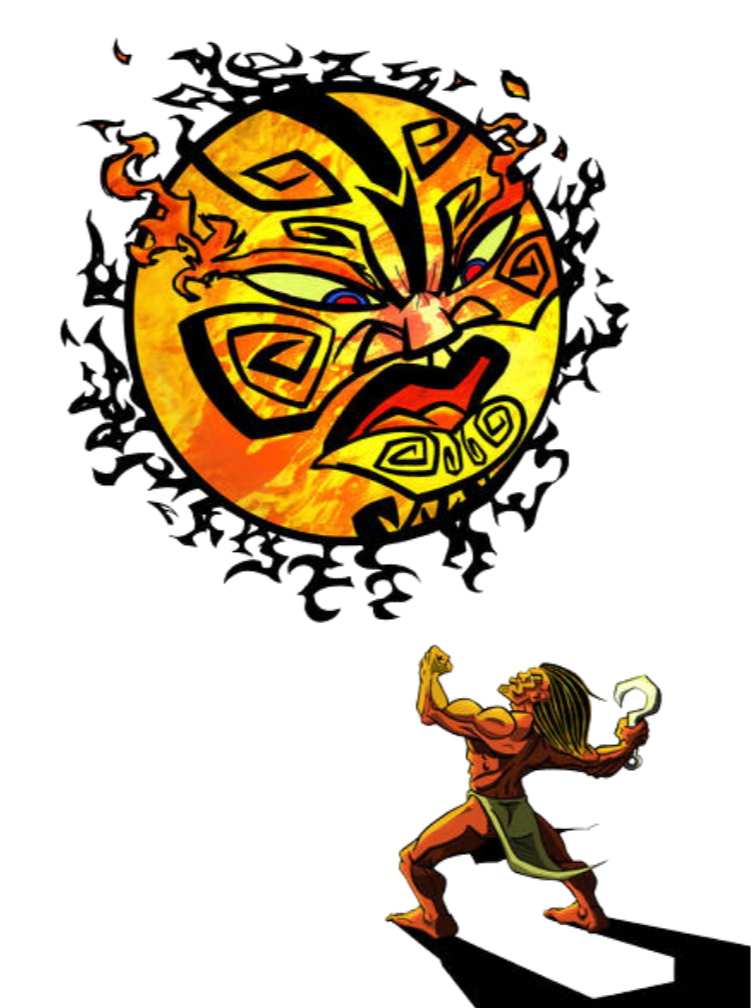
Image Credit: Hika Taewa, Deviant Art
Development of the curriculum was a whole-team effort, informed by cross-disciplinary, multi-generational insights and expertise. “The collaboration aspect of Capturing Te Rā is part of what makes this programme so special. Myself, Sarah [Grant, Co-Lead] and Bex [De Prospo Carr, Operations Lead] are all mid-career, but with very different specialties, including matāuranga (knowledge) Māori, media, education, project management, and communications. We drew on our expertise, as well as the incredible knowledge of Founder, Joanne McEachen (Waitaha, Ngāti Māmoe, Ngāi Tahu), to shape the curriculum. Alongside that, we have two younger, GenZ team members, Basil Penwarden (Te Aitanga-ā-Hauiti, Ngāti Porou) and Te Waiora Wanoa-Sundgren (Te Atiawa ki Whakarongotai, Ngāti Porou, Ngāti Raukawa, Ngāti Toa, Ngāpuhi), who is not too long out of kura kaupapa education herself. And on the other end of the generational spectrum we invited my 80-year-old mum to assist us in perfecting the te reo (language) Māori translations. Because she’s a native speaker, she was able to weave ideas and philosophies and concepts into the programme, bringing analogies and poetry to it, the way native speakers naturally do. This curriculum was very much an all-hands-on-deck effort that pulled on all the collective skills and resources we have; this speaks to the multi-faceted nature of our organisation, which is grounded in te ao (worldview) Māori and is inclusive of a range of skills and backgrounds. Its development has strengthened us in a number of different ways.”
With the programme now rolling out in kura in Tairāwhiti thanks to a new funding partnership with Trust Tairāwhiti, Nikora hopes that it will help rangatahi Māori look at energy differently, as not just a tool but an enabler. “The connection between energy and a global value chain is very real. It’s all around us, even if it’s not something we see or think about every day. Capturing Te Rā encourages students and communities to zoom out, look at what the energy situation is for Aotearoa, and investigate how we can do things better at an iwi (tribe) or whānau (family) level. We’re exploring how we can look at energy differently, work together differently, and work towards energy sovereignty.”
This is especially relevant in regions like Tairāwhiti, where climate change and natural events routinely cause power disruption. “There are a lot of large-scale disasters happening all over the world, and without power you go back to absolute basics very quickly. This speaks to a vulnerability that many of us don’t think about very often, but it is very front-of-mind in places like Tairāwhiti and communities that have been ravaged, sometimes repeatedly, by the effects of climate change.”
The big-picture vision, Nikora says, is to see the programme form the foundation for a national energy curriculum. “As we look to bring it into mainstream schools throughout Aotearoa, we need to use the curriculum to open up broader conversations about how clean energy will power the next century of innovation. That future needs grounded leadership to support smarter technology, and we believe that Māori are not simply consumers of that technological future, but architects of it. You can stand firmly in your whakapapa (heritage) and still design the future.
“These are the conversations we’re having now. How can we connect to the wider picture - rising oil costs, dependence on fossil fuels - and upskill our national learning and capability accordingly? If we do, what could that mean for Aotearoa? We know we have the ability to deliver Capturing Te Rā nationwide; now we need to work alongside the decision-makers who can actually help us make it happen.”