
Kia Kotahi Ako Celebrates Four Years of Powering Collaborative Impact
As Kia Kotahi Ako begins te tau hou Pākehā (Western New Year), our tīma (team) celebrates the important mahi (work) that we did to support rangatahi (young people) and Papatūānuku (Mother Earth) in 2025. Through the lens of our core values, we reflect on the partnerships and kaupapa (programmes) that have brought us this far, and the impact we look forward to contributing to over the years ahead.
Whakapono
We believe in the value of Mātauranga Māori and courageously use this knowledge in the pursuit of our purpose.
Our flagship We Share Solar Programme continued to flourish in 2025, with an expansion now underway to deliver the programme to four new kura kaupapa (Māori immersion schools) in the Tairāwhiti (East Cape) region in 2026. Kia Kotahi Ako Trustee Nikora Ngaropo and Project Lead Te Waiora Wanoa-Sundgren travelled to Ūawa in December to onboard the first of the new kura. “We’ve been active in Tairāwhiti for a couple of years already,” Te Waiora says, “in collaboration with [Edmund Hillary Fellow and CEO of These Hands GSSE] Thabiso Mashaba, who has facilitated the solar suitcase programme in adult workshops for 60 participants across the region.
“This move to support Tairāwhiti kura, which Thabiso will also help to facilitate, is a natural extension of the mahi that we have done with rangatahi through the We Share Solar Programme in Ōtautahi (Christchurch), Tāmaki Makaurau (Auckland), and Taranaki. It will enable us to reach up to an additional 100 tauira (students) in 2026.” Supported by our new funding partners at Trust Tairāwhiti, this programme expansion will leverage the power of education to unlock the potential of their recent investment to equip the four kura - Te Waha o Rerekohu Area School in Te Araroa, Te Kura Kaupapa Māori o te Waiu o Ngāti Porou in Ruatōria, Hatea-a-Rangi in Tokomaru Bay, and Tolaga Bay Area School - with solar panels, battery storage, and pool heating systems. This builds on our previous work alongside schools and kura across the motu (country), with 130 tauira in six schools having joined in solar learning programmes to date. Through hands-on learning and real-life application of knowledge, we have inspired many of those students to consider careers in climate change and renewable energy.
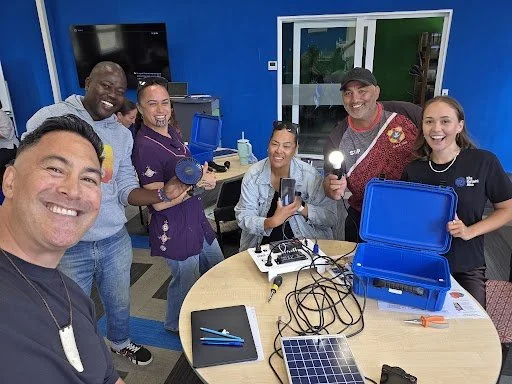
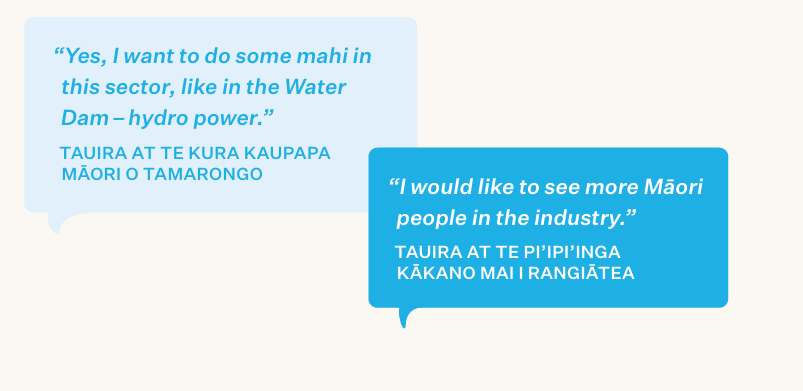
Over the past four years, We Share Solar has garnered support from a number of funders and potential partners in energy, climate resilience, and disaster preparedness, including Orion, Ngā Iwi o Taranaki, Toi Foundation, Lululemon, Helios, Canon Oceania Grants, Honnold Foundation, Lotteries, and Edmund Hillary Fellowship Fellows. Kia Kotahi Ako adapted the programme into Te Reo Māori in 2023 in collaboration with partner kura Te Pi'ipi'inga Kakano Mai I Rangiatea (TPKMIR) in Taranaki, empowering students to learn about solar energy within their cultural context. By bringing TPKMIR students together with We Share Solar Founder, Hal Aronson, and Board member Barry Neal, we were able to start the re-design of a solar suitcase that is more fit-for-purpose for Aotearoa. This involved developing and sharing a design narrative based on Te Ao Māori concepts and a tuakana-teina (intergenerational learning) approach, involving former students in programme design and delivery. In 2026 we will continue development of the solar suitcase kits and curriculum, including exploring digitising resources, to support more rangatahi to access programmes tailored to their aspirations and cultural contexts.
We also recently released Te Ara Pūngao: Rangatahi Māori Leading Aotearoa’s Clean Energy Future, a research report completed in collaboration with Massey University and industry partners that explores opportunities to create equitable, iwi-led pathways into renewable energy through Mātauranga Māori (Māori knowledge) and education. Through this kaupapa, we were able to better understand how hands-on learning inspires curiosity and builds confidence, the opportunities for cultural relevance to inspire and ground learning, the defined need for visible pathways into renewable energy, and the ways that whanaungatanga (connection) unlocks aspiration. In 2026 we will work to action the recommendations in this report and better support rangatahi Māori to lead a clean energy future.
Whakatuturutanga
We present ourselves authentically and invite others to do the same.
Since Kia Kotahi Ako was established in 2021, we have proudly championed kaupapa that aligns with our core values, and we continue to do so, in particular alongside our partners at 21-century learning village, Te Pā Wānanga (Te Pā). We connected and supported their tīma to win the global Zayed Sustainability Prize (USD$150k) in 2025 for their Puku Mara indigenous composting project, which will strengthen the health and wellbeing of over 1,000 community members, and we plan to work alongside their tīma to embed the Solar Suitcase education programme into the Te Pā curriculum in 2026.
Our Founder, Joanne McEachen, has played a crucial role in engaging Ministry of Education (MoE) support for the development of their new site in Banks Peninsula. “As someone who has worked at the system level in education – both regionally and nationally – I have witnessed firsthand how policy decisions made in Wellington and in regional offices translate into opportunities or barriers for our whānau,” she says. “Te Pā o Rākaihautū, the South Island’s only kura ā-iwi, opened in 2014 with no property budget and, a decade later, its tamariki were still learning in cold, temporary buildings until the beginning of 2026, when repairs and upgrading begin on their current site. Despite these obstacles, they continue to achieve above-average results in NCEA, emphasise well‑being through programmes like Puku Māra and Pā Wānanga, and produce confident, bilingual graduates. Kia Kotahi Ako is committed to walking alongside Te Pā with continued support and advocacy to get the funding and facilities their tauira deserve.”
The new Te Pā location will integrate mātauranga Māori-centred education, wellness facilities, solar community energy, substantial vegetable gardens, fruit and rongoā (traditional healing) orchards, and staff housing. It will also provide a unique opportunity for Kia Kotahi Ako to bring our learnings from the Taranaki solar array to Ōtautahi, with the new Te Pā facilities offering a potential total building footprint with up to 8000sqm of roof space where we can work with them to install a future solar system (planned for 2027, dependent on funding).
Project Lead and Edmund Hillary Fellow Rangimarie Parata Takurua is excited to grow the partnership between Te Pā and Kia Kotahi Ako into the solar space, creating new opportunities to support the interconnected health and wellbeing of both people and planet. “We have worked alongside Kia Kotahi Ako since their inception in 2021, and we are excited for the opportunity to collaborate on their Solar Suitcase programme and incorporate it into the Te Pā curriculum this year. This timing is especially apt as we begin redevelopment planning on our current buildings and plan ahead for our new space in Diamond Harbour, with a clear focus on integrating solar where we can.”
Whanaungatanga
We cultivate genuine connections to enable collective action towards achieving success.
Kia Kotahi Ako has been built upon a commitment to creating trusted relationships. We walk beside collaborators and partners to learn from them and provide what is needed. We are informed by a ‘Scaling Deep’ approach that drives us to strengthen connections and embrace culturally transformational work that is necessary for enduring and meaningful systems change.
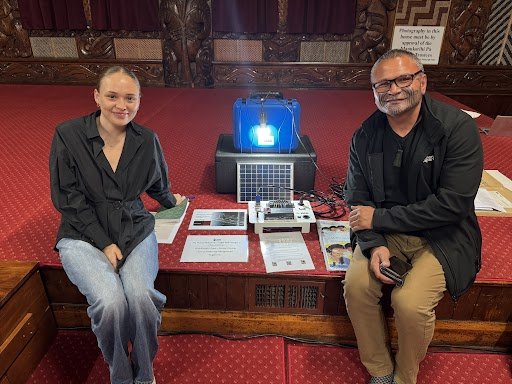
At the end of last year, we were grateful to formalise our growing partnership with Te Heru Māpara, a Te Kāhui Maru-owned education provider. Together, we’ve been showcasing the Solar Suitcase Programme at events like National Maori Energy Community Day, giving whānau practical experience with solar technology and sparking conversations about energy literacy, sustainability, and rangatahi-led innovation. This partnership builds on our kaupapa and expands the reach of our mahi in communities across Taranaki and beyond. As we look ahead through 2026, we are excited to work with Te Heru Māpara to accredit the Solar Suitcase Programme and establish visible career pathways for rangatahi into the renewable energy sector. “This project highlights the transformative potential of culturally grounded, hands-on learning,” says Hori Rapana, Pouako-Ngā wānanga o Maui Pōtiki of Te Heru Māpara. “By entrusting rangatahi with real responsibility and tools that reflect their identity, we foster growth, confidence and reconnection - empowering them to step into their future with pride.”
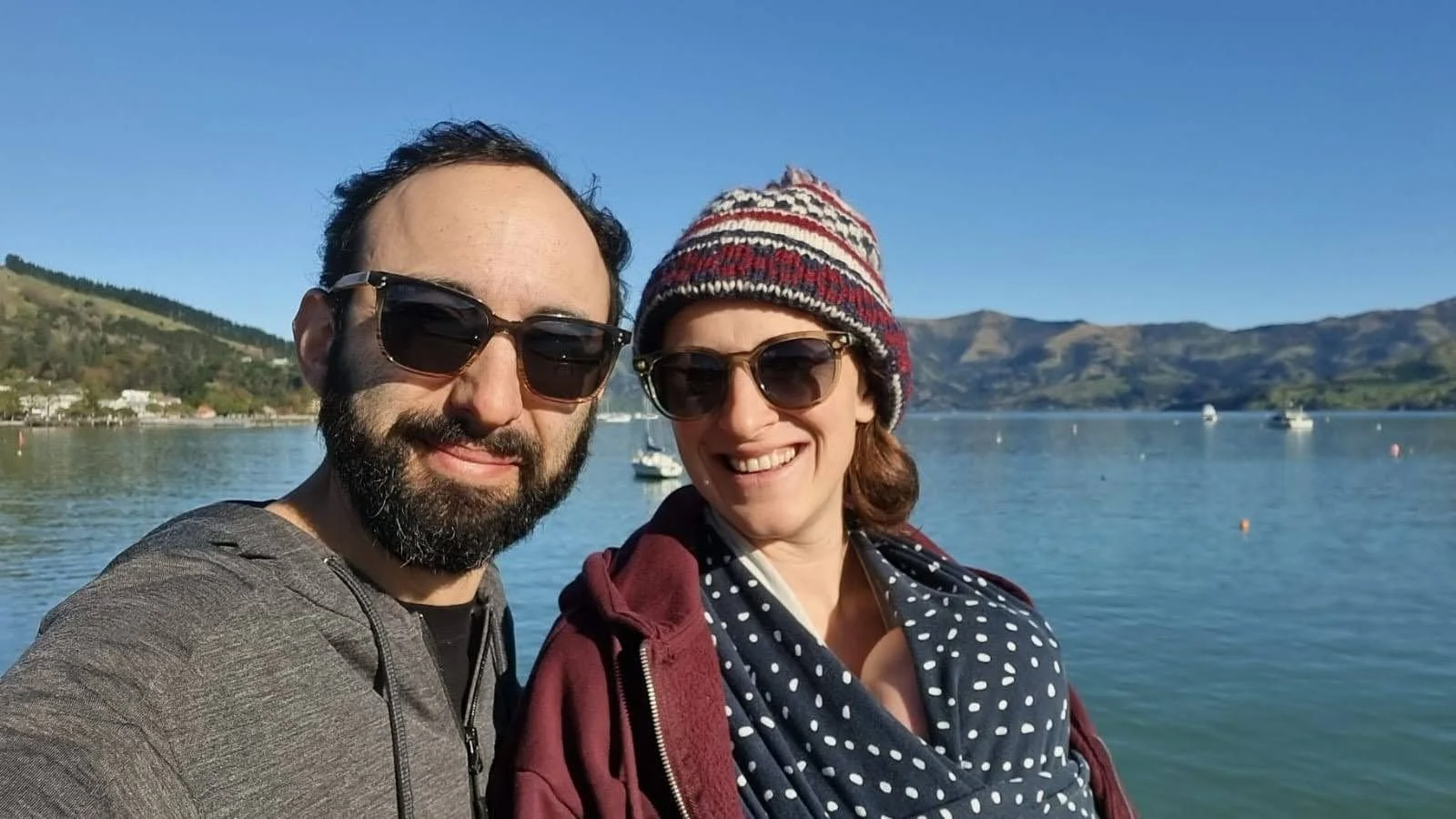
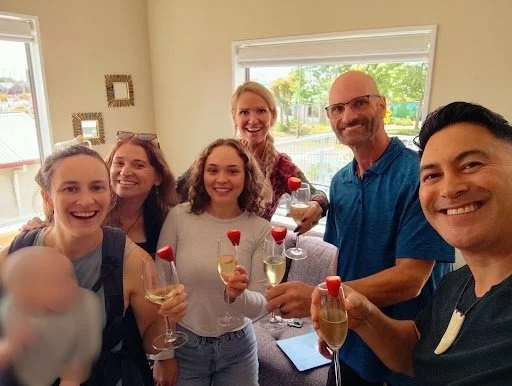
Another significant new addition in 2025 was Josie , first pēpi of Kia Kotahi Ako CEO, Sarah Grant. “This is a truly unique group of people to work with, and I cannot thank everyone enough for the flexibility and support as I started a family,” Sarah says. “I’m privileged to work in a team that fully lives its values.” Josie’s arrival also allowed us to welcome EHF Fellow and Director of Authentic Storytelling, Bex De Prospo Carr, as a core member of the tīma. Bex has worked alongside Kia Kotahi Ako since our inception, in particular through impact storytelling and management support. When Sarah took some time away to welcome Josie, Bex stepped in to help, and we’re thrilled that she has remained on to continue supporting us as Operations Lead.
In addition to his recent hands-on work with the Solar Suitcase programme, Kia Kotahi Ako trustee Nikora Ngaropo (Te Rarawa, Tūhoe, Ngāti Porou, Ngāpuhi, Ngāti Kahungunu) is transitioning into the role of Co-Lead Māori in 2026, working alongside Sarah and the board to support our tīma, deepen our support for communities, and accelerate our impact for the years ahead.
We also farewelled Kia Kotahi Ako strategic advisor Huia Lambie at the end of 2025, as she decided to take a step back from Kia Kotahi Ako to enjoy some well-earned time relaxing with her māra (garden), whānau and friends. Huia has poured her heart and energy into everything we do, and her passion for empowering rangatahi, whānau and communities has left an indelible mark on our kaupapa. While she’s taking a pause, she will continue to be a champion of Kia Kotahi Ako, supporting and celebrating the great legacy work we’ve done together.
Honore
We conduct ourselves with integrity and hold ourselves accountable to what we know is right.
While we grow our core kaupapa, we also continue looking for new possibilities to expand our mahi and power collaborative impact. Last year, we welcomed a new partnership with Honnold Foundation, a values-aligned funder deeply committed to long-term, indigenous-led solar solutions. With their support, we are preparing to commence installation of a solar array at our partner kura Te Pi’ipi’inga Kākano Mai i Rāngiatea in Taranaki (delivered by Tū Mai Rā). Our largest project to-date, this valuable asset is projected to save the kura $16,000 and 8.2 tonnes of CO2 per year. 80 solar panels are being installed this summer with a total output of nearly 50kW and a 61.4kWh battery setup, allowing additional energy to be sold back into the grid on weekends and holidays. With additional grant funding secured this year from Lotteries Grants Board, we are excited to leverage this solar array as a learning tool that sits alongside our Solar Suitcase Programme, community energy literacy workshops, and career pathways/workforce development in Taranaki.
As Kia Kotahi Ako looks to the months and years ahead, we are excited to continue our mahi to accelerate system-changing initiatives that scale deeply within communities. We will continue to advocate for Māori communities, provide funding and meaningful partnerships, and champion opportunities to realise their aspirations. We will support our new partner kura in Tairāwhiti, and continue to build on our established relationships and kaupapa in Taranaki and Ōtautahi. We look forward to working alongside Te Heru Māpara to accredit the Solar Suitcase Programme and build visible, meaningful pathways for rangatahi into the renewable energy sector. We also look forward to our continued partnership with Te Pā, providing support and resources, including in the renewable energy space, and linking in partners as they work to raise funding.
We will continue to share the stories of our partners and projects with Edmund Hillary Fellows as champions and ecosystem connectors of their values-aligned mahi. As we build our own capabilities, we will seek to expand our team, our knowledge, and our kete (basket) to support our ongoing journey of transforming education and environmental systems through indigenous knowledge.
“We are so excited to move into this next phase of mahi with Kia Kotahi Ako,” Sarah says, “building on strong partnerships and important learnings. Personally, it is an incredible opportunity to co-lead with Nikora and learn alongside a truly unique team of champions, funders and communities. I believe we have all the ingredients to truly make long-term change at the system-level, led by the voices of whānau.”